


Photoprocesses in mesoscopic systems
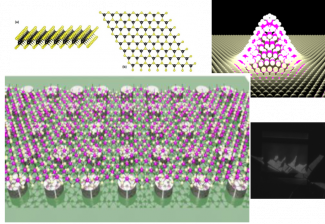
The previous decade witnessed the discovery of a new class of materials, truly two-dimensional (2D) atomically thin films. Graphene, a monolayer of carbon atoms, was historically the first representative of this class to be discovered. This discovery was awarded the Nobel prize in 2010. Despite the plethora of its remarkable and useful properties, graphene demonstrates a relatively weak electromagnetic response in the visible range. In contrast, the next generation of 2D materials, namely, transition metal dichalcogenides (TMDs), are characterized by resonant optical response in the wavelength range of 600-800 nm. We investigate transport and optical properties of TMD structures and other systems of reduced dimensionality: semiconductor quantum wells, quantum wires, and ensembles of carbon nanotubes.
The research has both applied and fundamental dimensions and can be used for the design of a new class of on-chip optical coherent sources, high-speed optical modulators, and optically controlled spintronic components.
Staff