


Nanosensing and molecular diagnostics
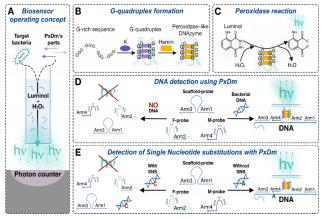
Modern medicine, ecological monitoring, and food quality control require rapid and accessible methods for detecting biological marker molecules – nucleic acids, proteins, and other clinically relevant compounds. Such technologies are essential for diagnosing infections, assessing patient health, and ensuring the safety of products.
Our laboratory combines molecular recognition using DNA constructs, nanomaterials, optical detection methods, microfluidic technologies, and digital data processing using computer vision. The research focuses on two main areas.
The first area is the creation of compact point-of-care systems for rapid diagnostics using nanomaterials. This includes the development of optical and colorimetric sensors based on optically resonant nanoparticles, with potential applications such as the early detection of sepsis biomarkers.
The second area is dedicated to developing DNA constructs for nucleic acid detection, with applications in different types of molecular diagnostics. One of the key objectives is to create systems for the rapid detection of infectious pathogens, including in food quality control.
Another objective is to develop methods that extend the capabilities of conventional approaches. For example, PCR offers high sensitivity but has limitations when it comes to detecting single-nucleotide substitutions. DNA sensor structures can overcome these limitations by generating an optical signal through highly specific interactions with the target sequence. This approach is promising for detecting genetic variants of pathogens and mutations associated with antibiotic resistance.
Overall, the laboratory aims at creating biosensing and diagnostic platforms for the detection of clinically significant biomarkers, pathogens, and genetic variants
Staff